July 14, 2026 · OcclusionOS
The Hygiene Recall Gap: Why Your Treatment Chairs Are Full but Your Profit Is Flat
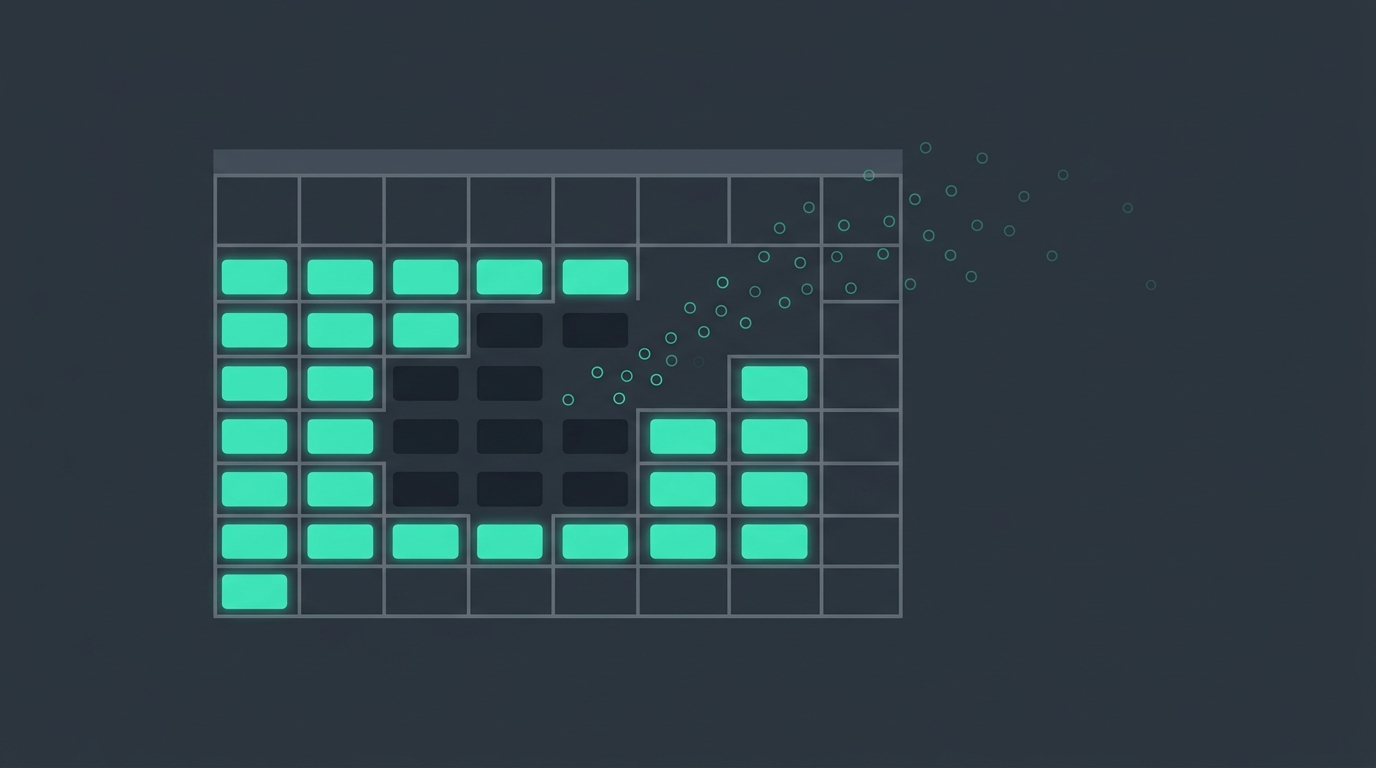
The most dangerous state for a dental group owner is the busyness fallacy. Every operatory is occupied, every column of the schedule looks full, and the bank balance refuses to move. If you have scaled to three or four locations, you have likely hit a hard operational ceiling where the clinical instincts that built your first practice stop serving the enterprise. You feel frantic, your staff is stretched thin, and yet at any given moment there can be 200 or more active patients in your database who have not been reappointed.
That is a blind-data liability. It does more than create administrative stress; it erodes your profit distributions and makes clearing the nut harder every month.
Vanity metrics are distorting your economic reality
Traditional agency reports are strategically dangerous because they live entirely at the top of the funnel. They celebrate call volume and impressions while ignoring the systemic leaks inside your existing patient base. For a group doing $6.5M in collections, managing to clicks instead of net collections percentage is a recipe for a 70 percent overhead nightmare. Real clinical-operational fluency means pushing overhead below the 60 percent benchmark so margin moves toward distributions instead of vendor fees.
| Agency metric | Strategic reality | Owner economic impact |
|---|---|---|
| Lead volume | Patient intake | No correlation to the 95 to 99 percent net collections target |
| Click-through rate | Interest level | Ignores whether patients are PPO-heavy or fee-for-service |
| Total impressions | Brand awareness | Masks low-margin volume that fills chairs without profit |
| Ad spend | Capital outlay | Says nothing about case acceptance percentage |
A busy schedule often hides a heavy load of low-reimbursement PPO cases while high-value patient personas go unnoticed. If marketing brings in fifty new patients and your systems fail to convert them into accepted, high-value treatment plans, you have raised your overhead for the sake of appearances. Growth means shifting attention from external demand to the internal systems that monetize it.
The $250,000 file cabinet: diagnosing the hygiene and treatment gap
Full chairs are frequently a sign of failed reactivation rather than successful retention. The hygiene recall gap is the mass of lapsed recall and unscheduled treatment sitting dormant in your practice management software. OpenDental, for example, runs on a MySQL/MariaDB backend with more than 1,400 prebuilt queries, yet most owners have neither the SQL fluency nor the time to use them. That is the definition of a blind-data liability: you own the information but lack the architecture to act on it.
When an office fails to reappoint at least 90 percent of its hygiene patients, it creates a self-inflicted crisis. The owner overspends on external marketing just to stay flat, paying a tax for failing to manage the patients already on the books. Across a multi-location group, there is often $250,000 or more in unaccepted treatment sitting in the charts. Every unsurfaced case is clinical work you already diagnosed, left on the table while the group chases the next inquiry.
Geographic constraints and the myth of one plan for every office
A multi-location group cannot be managed as a carbon copy. Each office sits in a specific trade area with its own competitive pressure, such as a corporate group opening three miles away in a high-growth suburb. One office may be constrained by staffing; another may look quiet while hiding high-margin potential in implant and cosmetic cases.
Why one location outperforms another is rarely about the associate's clinical skill; it is about how that office fits its local economy. Trade-area mapping is what turns a generic group-wide plan into precise, location-specific interventions.
The connected system: intake, scheduling, and care continuity
Dental growth is systemic. Marketing, intake, scheduling, and case acceptance have to run as one machine, because the distance between conversion (the phone rings) and monetization (the treatment is collected) is where groups stall. A full schedule without strong case acceptance percentage is a high-overhead distraction that keeps you in the chair longer for less money.
The Pareto Principle does heavy lifting here. Roughly 20 percent of your patients carry the majority of the month's provider production. If your systems cannot identify and prioritize those cases, your team spends its energy on low-margin work. Treat intake and scheduling as the primary engines of your net collections percentage, because clean data and a high-margin patient mix are also the levers that protect the multiple a buyer will eventually pay for your group.
From instinct to data-infused growth
Moving from solo clinician to group entrepreneur requires trading gut feel for a diagnostic framework. The question is no longer "how do we attract more new patients." It is "where is the next dollar of investment most productive?" Close the hygiene recall gap, map your trade areas, and connect your intake systems, and you will see exactly where growth is leaking before you spend another marketing dollar. That is how clinical excellence becomes take-home pay and equity value, managed with the same precision you bring to the operatory.
OcclusionOS helps multi-location dental practices diagnose where growth is actually constrained, from patient economics and trade-area opportunity to intake, care continuity, KPI architecture, and location-specific strategy. If you are ready to replace gut-feel growth with a data-infused operating framework, start with OcclusionOS.